
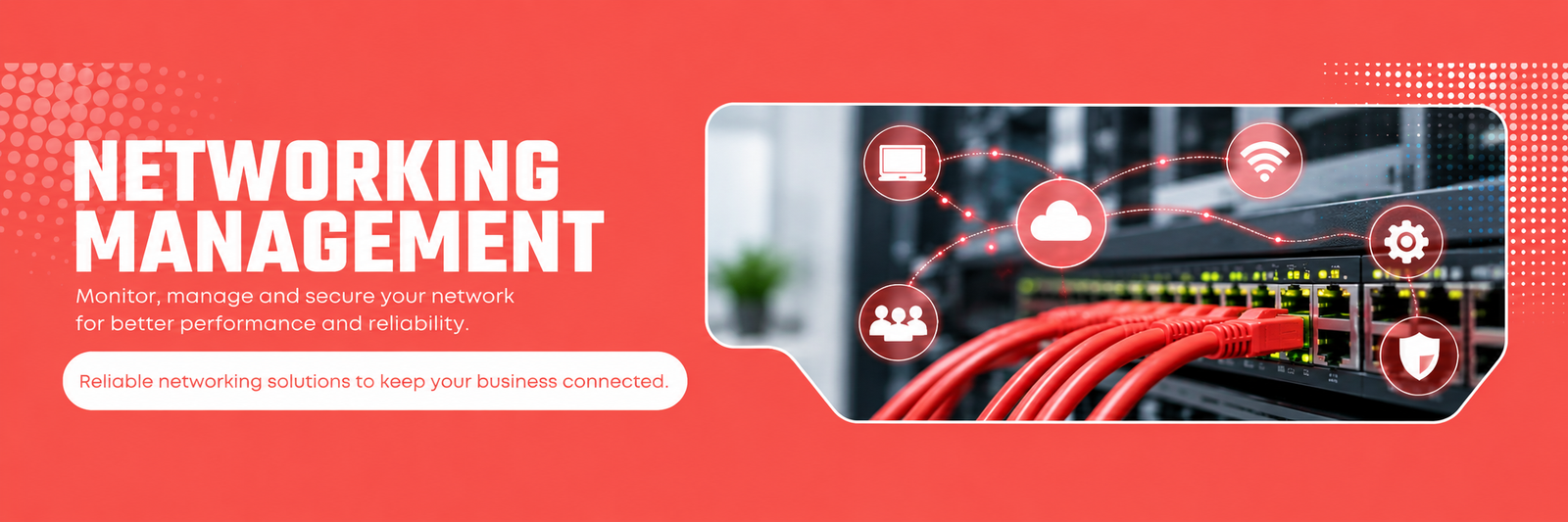
Networking Management
Network management is the process of administering and managing computer networks. Various services provided by this discipline include fault analysis, performance management, provisioning of networks, maintaining the quality of service, and so on. Software that enables network administrators to perform their functions is called network management software.
Networking management is about keeping the flow of communication and information open and available, usually on an intranet or Internet system. A network manager is an expert in dealing with the technology that allows for employee interaction with other employees and customers, as well as allowing network users access to other systems, such as databases and e-mail. Professionals in this field may also be responsible for training others on network use, network security and keeping users accountable for what goes on in a system’s network.
Benefits of Network Management
Better Network Performance
Prevents bottlenecks and ensures smooth, fast data flow.
Better Security
Protects data, tracks unauthorized access, and enforces security policies.
Fault Detection & Quick Resolution
Detects issues instantly and reduces downtime.
Optimal Resource Allocation
Uses bandwidth, hardware, and software efficiently to reduce costs.
Scalability & Easy Expansion
Allows seamless addition of new users, devices, and services.
Quality of Service (QoS)
Prioritizes critical apps like VoIP and video conferencing.
Accountability and Compliance
Monitors user activity and ensures regulatory compliance.
Why Choose Network Management Services?

Reliable, Secure & Scalable Networks
- Security, Performance & Reliability
- Monitoring LAN & WAN
- Printer Networking Service
- Managed Network Services
- Remote Network Services
- IP Telephony Services
- Wireless Services
- Security Management
- Fault Management